


By Digital Practice
Be part of a new approach to clinical excellence
Clinical excellence does not stop when a patient leaves the practice. It is also about understanding what happens afterwards.
- Is the patient recovering as expected?
- Are there complications?
- Are there patterns we can learn from?
- Can that learning help us deliver even better care next time?
At Digital Practice, this is an area we feel particularly passionate about.
That is why we have developed a new Clinical Excellence automated flow, designed to help veterinary practices strengthen clinical governance, understand patient outcomes and demonstrate continuous improvement in clinical care.
We are now looking for Digital Practice clients to take part in the first pilot. If your practice would like to be involved, simply get in touch with our team and we will arrange a short conversation to talk you through it.
Looking beyond the consultation room
Reviewing outcomes, carrying out clinical audit and learning from variation are already fundamental parts of improving the quality and safety of human healthcare. We believe there is a significant opportunity to make these activities easier and more routine in veterinary practice too.
Our Clinical Excellence flow also aims to sit closely alongside the RCVS Practice Standards Scheme focus on clinical governance and continuous improvement. It can help practices reflect on clinical outcomes, identify opportunities to improve and demonstrate how learning is translated into better patient care.
However, gathering meaningful information after a patient leaves the practice can be difficult. Follow-up may be inconsistent, teams may rely on clients contacting them when something is wrong, and useful information about recovery can remain uncaptured.
Our Clinical Excellence flow aims to close that gap.
Making clinical governance part of everyday practice
The first stage of launching our Clinical Excellence flow will focus on a practical pilot using the automation and messaging functionality of Digital Practice.
The pilot will begin with one agreed procedure, allowing each participating practice to test a simple and consistent post-operative follow-up journey:
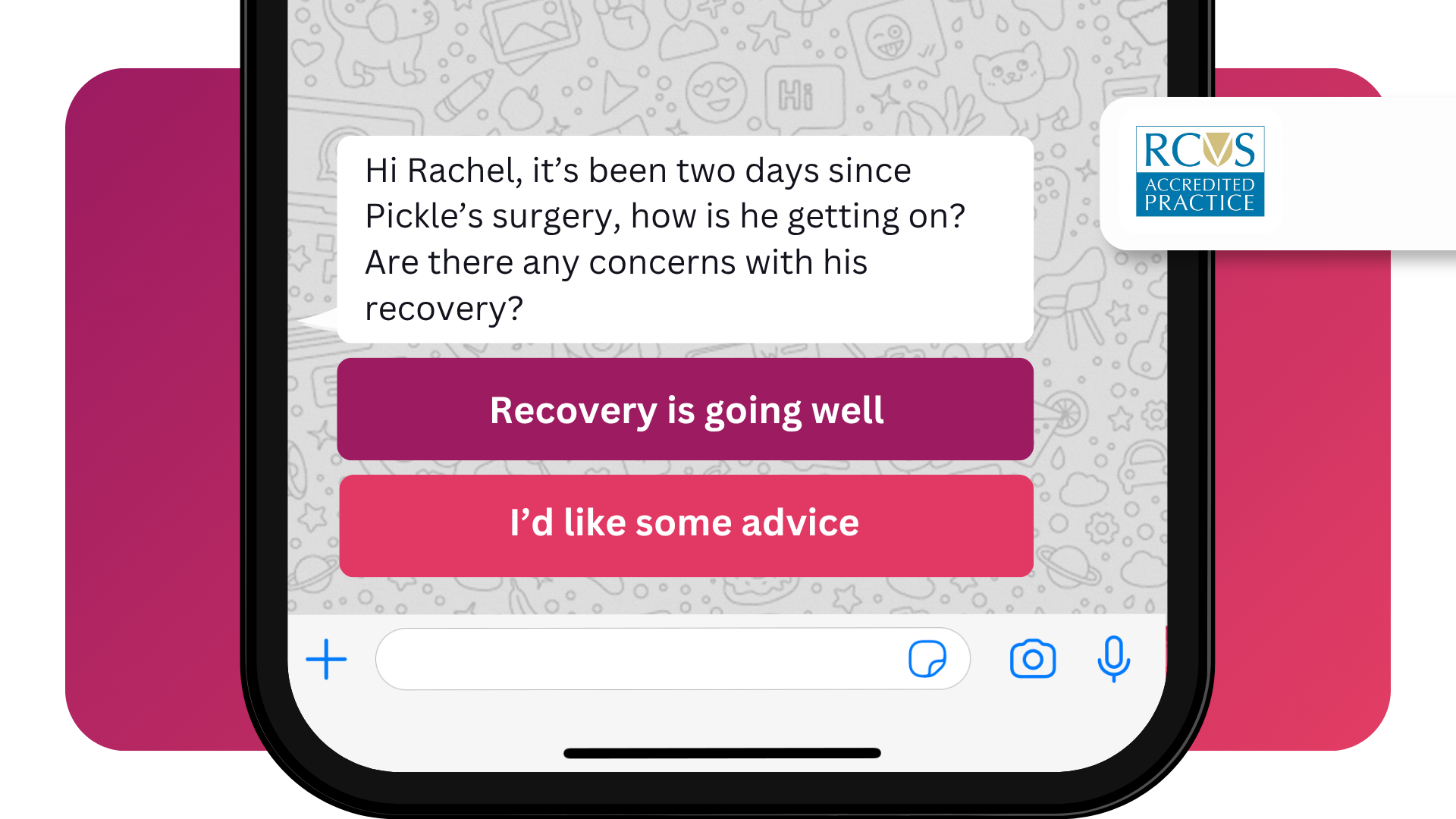
- Day 2: An automated welfare check encourages the client to provide an update on their pet’s recovery.
- Day 28: A second follow-up gathers information about the patient’s longer-term recovery and the client’s experience.
- Concerns identified: Responses are reviewed by the practice team and acted on using the practice’s normal clinical protocols and escalation processes.
Starting with a defined procedure will make it easier to assess first responses, whether clients engage with the messages and whether the information collected provides genuine clinical and operational value.
This is not simply about sending follow-up messages.
The aim is to help practices close the loop on clinical care by creating a consistent route for gathering post-operative feedback, identifying possible concerns and learning from patient outcomes.
Turning follow-up into meaningful evidence
Over time, structured follow-up could help practices build a useful body of evidence to support:
- Clinical governance and clinical audit
- Continuous improvement in patient care
- Earlier opportunities to identify recovery concerns
- Identification of trends and opportunities for learning
- A more consistent post-operative experience for clients and patients
- Future Practice Standards Scheme preparation
Importantly, this can happen as part of normal clinical workflows rather than relying entirely on retrospective audits and manual data collection.
Participating practices will be supported with information to review engagement, recurring themes, follow-up actions and the time required to manage responses. This information can support internal discussions about what is working well, where processes could be improved and whether further audit or team training may be helpful.
Together, these insights can give teams a clearer picture of the patient journey after discharge, bringing outcomes into regular clinical conversations rather than viewing each response in isolation.
Practices can use this evidence to recognise what is working well, explore variation and focus audits, training or process changes where they can have the greatest impact on patient care.
Help shape what comes next
This is an early pilot, with room to evolve. Participating practices will play an important role in shaping the Clinical Excellence flow as it develops.
Your input will help us understand whether structured post-operative follow-up creates meaningful value for practices, clients and patients. It will also help us identify which future features could provide the greatest benefit, from improved reporting and closer PMS integration to more advanced outcome tracking across a wider range of clinical pathways.
If you would like to help us explore a more consistent, evidence-led approach to post-operative care, get in touch with the Digital Practice team to find out more about joining the pilot.